Chapter 1 - First Class
The first bodies arrived in business class.
Not enough to stop the flights.
A man in a linen sport coat collapsed beside a moving walkway in Singapore. A woman returning from a wellness retreat in Zurich began coughing blood into a silk scarf somewhere over the Atlantic. By the time the aircraft landed at JFK, three passengers were dead and two flight attendants had developed fevers.
The photographs spread before the ambulances arrived.
The afflicted all carried the same polished look — expensive luggage, clear skin, soft hands untouched by physical labor. They belonged to the frictionless class, the international caste that moved continuously between continents beneath the glow of airport lighting and premium memberships.
The networks called it Hanta-X.
A temporary name.
Modern civilization believed temporary names could delay permanent consequences.
For two weeks the anchors smiled while discussing infection maps beside stock market updates and weather reports. Experts appeared in split-screen panels arguing over transmission rates while advertisements for luxury cruises played uninterrupted beneath them.
The world had become incapable of distinguishing catastrophe from content.
In Detroit, a night janitor named Walter watched the reports from the employee lounge television at Metropolitan Airport while wiping down empty gate counters with industrial disinfectant.
“Another fake panic,” one baggage handler muttered behind him.
Walter said nothing.
He remembered COVID.
Not the virus itself.
The arguments.
That was the part people carried forward like scar tissue.
Chapter 2 - The Frightened
The frightened appeared first.
They emerged online in masks and gloves, posting grainy videos from supermarket aisles stripped bare of bottled water and canned soup. Apartment doors sealed with duct tape began circulating through social feeds beside amateur charts predicting collapse.
People disinfected groceries beneath fluorescent kitchen lights while listening to death counts whispered by exhausted news anchors.
Parents stopped letting children touch playground equipment.
Elevators became confession booths of silent paranoia.
Every cough acquired the weight of a gunshot.
Meanwhile the airports remained full.
The wealthy travelers continued moving through the bloodstream of the world exactly as before — conferences in Dubai, gallery openings in London, climate summits in Geneva, private schools in Manhattan.
The pathogen moved elegantly with them.
That was the terrifying part.
No chaos.
No swarms in the streets.
Only smiling people rolling expensive luggage through terminals while carrying microscopic ruin in their lungs.
Walter watched them nightly from Gate D17.
They looked healthy.
Always healthy.
One evening a silver-haired man staggered near the security checkpoint and collapsed face-first onto polished terrazzo flooring. For several seconds the crowd merely stepped around him, annoyed more than alarmed.
Then the coughing started.
Wet.
Deep.
Wrong.
The sound emptied the terminal in under a minute.
Chapter 3 - The Unafraid
The frightened sealed themselves indoors.
The others held parties.
Videos flooded the networks under hashtags like #PlagueHoax and #FearVirus. Young men filmed themselves licking subway poles. Influencers streamed crowded nightclub appearances while mocking “hysterical shut-ins.”
One pastor declared the disease a spiritual test designed to punish weak faith.
A financial commentator called it “an overreaction damaging investor confidence.”
A famous actor posted:
I refuse to live in fear.
Three days later he was dead in a private hospital outside Los Angeles.
The post remained online.
People argued beneath it for weeks.
Walter stopped reading comments after a while. The internet no longer resembled communication. It looked more like civilization documenting its own nervous breakdown in real time.
Outside the airport, billboards still advertised luxury vacations.
ESCAPE PARADISE THIS WINTER.
Beneath one of them, a refrigerated truck sat idling beside the emergency entrance of St. Joseph Mercy Hospital.
Nobody mentioned the trucks on television yet.
The anchors still smiled.
Still reassured.
Still thanked viewers for joining them.
Chapter 4 - Plague Ship
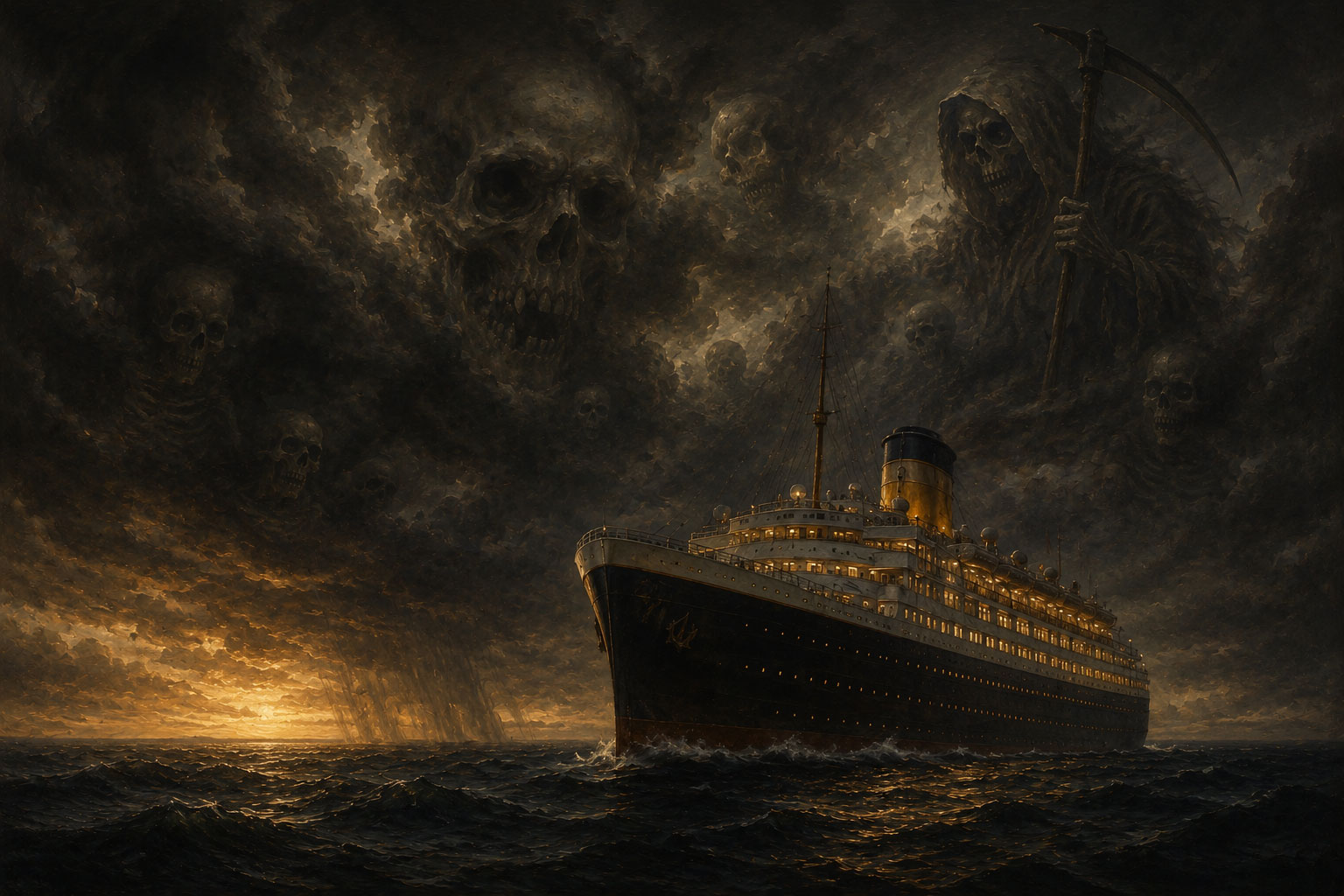
The cruise liner Elysian Dawn first appeared off the coast of Florida three weeks after the quarantines began.
A floating palace.
Fourteen decks of marble flooring, champagne bars, infinity pools, and private concierge service drifting silently beyond the harbor under a gray sky.
No country would allow it to dock.
At night its lights glowed offshore like a dying city.
News helicopters circled constantly overhead while commentators debated legal jurisdiction and humanitarian obligations. Drone footage showed passengers waving desperately from balcony suites while crew members in improvised protective gear carried bodies beneath white tarps toward refrigerated storage units near the engine deck.
The wealthy had purchased isolation from the world.
Instead they had trapped themselves inside it.
Walter watched the footage from home in his small apartment above a liquor store while rain tapped softly against the windows.
The ship disturbed him more than the death counts.
There was something ancient about it.
Like medieval plague paintings rendered in chrome and LED lighting.
The old world had rats and fleas.
This one had frequent flyer miles.
A crawl beneath the broadcast read:
GLOBAL CASES EXCEED 40 MILLION
The anchor continued speaking calmly while behind her the ship drifted across black water like a ghost refusing burial.
Chapter 5 - Continuity
That was the strangest part.
Not the deaths.
The continuity.
Coffee shops still served oat milk lattes beneath signs requesting social distancing. Corporations sent cheerful emails about “navigating these uncertain times together.” Streaming services released new comedy specials while military vehicles transported oxygen tanks through downtown streets.
The machinery of modern life continued operating long after belief in normality had died.
Walter rode mostly empty trains to the airport each night listening to recorded announcements reminding passengers to report unattended baggage.
The terminals smelled permanently of bleach.
Every surface gleamed.
Still the sickness spread.
The frightened became more frightened.
The unafraid became more reckless.
And somewhere between those extremes existed millions of exhausted people simply trying to survive the endless psychological abrasion of uncertainty.
Nobody trusted statistics anymore.
Nobody trusted medicine.
Nobody trusted government.
Nobody trusted each other.
The disease had entered the bloodstream of reality itself.
One evening Walter stood beside a massive terminal window watching an international flight taxi toward the gate through freezing rain.
Inside the aircraft, dim silhouettes moved weakly behind fogged glass.
An arriving plague ship.
Another one.
The automatic airport voice echoed overhead with mechanical politeness:
“Welcome to Detroit.”
Chapter 6 - The Last Lounge
By winter the executive lounges had become triage centers.
Leather chairs separated by plastic sheeting.
Bartenders replaced with National Guard medics.
The elite travelers still arrived carrying platinum cards and designer luggage, though many now moved with the slow uncertain gait of the already infected.
They refused to stop moving.
Movement had become their religion.
To remain still meant admitting the world had changed permanently.
Walter understood then that denial was not stupidity.
Not entirely.
It was grief wearing arrogance as camouflage.
Outside the terminal snow fell silently across abandoned parking structures and motionless taxi lines.
A child somewhere began crying.
A man nearby coughed violently into his sleeve.
Nobody looked at either of them.
The televisions overhead continued broadcasting debates.
HOAX OR GLOBAL EMERGENCY?
EXPERTS DISAGREE.
Walter stared at the screens for a long time.
Then he laughed softly to himself for the first time in months.
Not because anything was funny.
Because the argument would outlive the species itself.
Even at the end people still wanted to be right.
Beyond the glass another aircraft descended through the darkness toward the runway lights.
Steady.
Silent.
Beautiful.
Like all plague ships before it.
