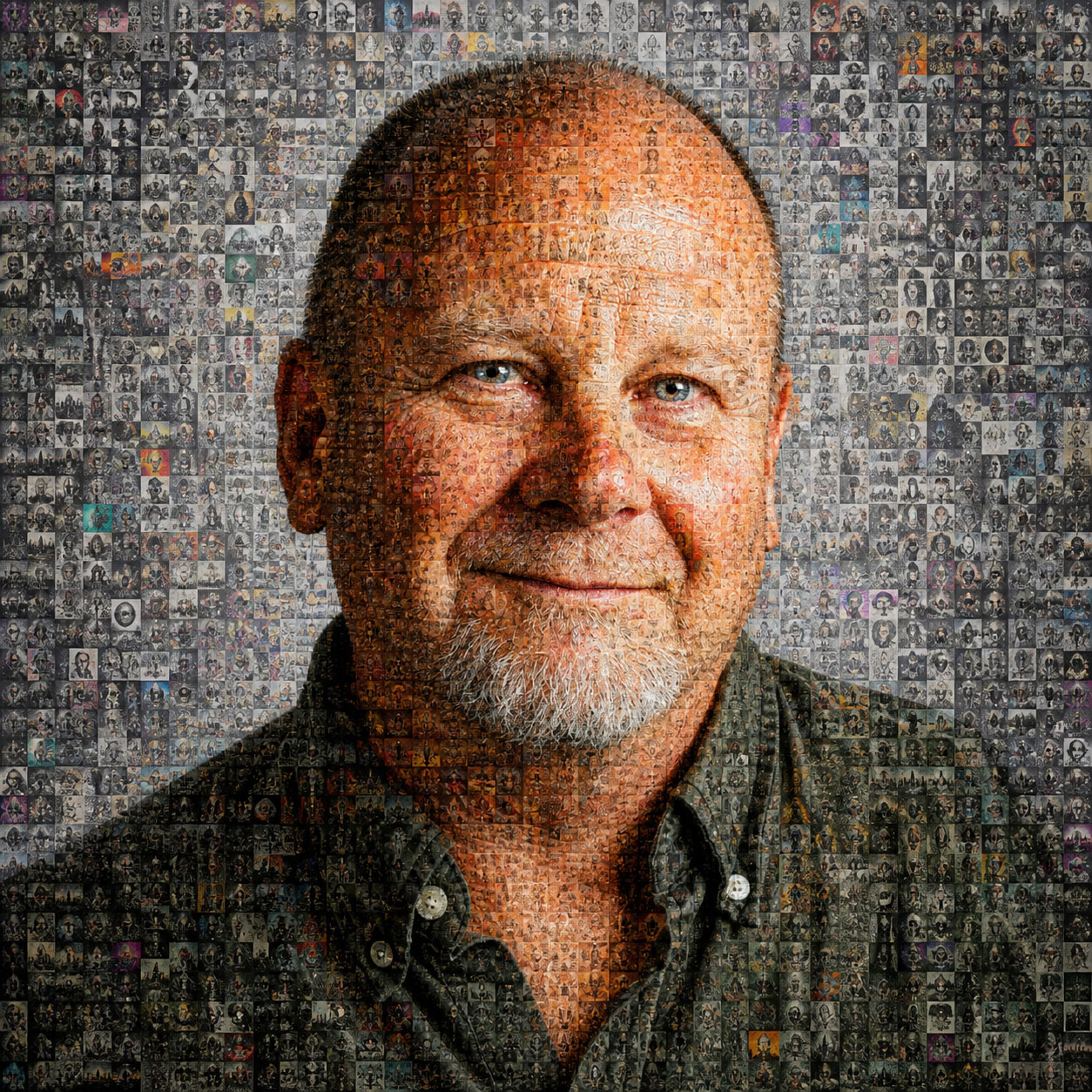
Meta City turned three on May 1st.
When this started, AI felt like a glitch.
Images came out wrong in interesting ways. Hands dissolved into abstractions. Faces hovered somewhere between portrait and hallucination. Text read like it had been translated through too many languages and then back again. It was unreliable, inconsistent—and strangely compelling because of it.
The machine didn’t quite understand what it was doing.
Neither did we.
Back then, the appeal wasn’t precision. It was possibility. You weren’t using AI to finish something—you were using it to see what might happen if you let go of control for a moment.
Three years later, the glitch has been smoothed out.
The outputs are cleaner. The systems are faster. The results are more predictable, more usable, more… professional. What was once experimental has been optimized. What felt like a strange collaboration now often feels like a service.
The shift happened quietly, then all at once.
AI moved from the margins into the center—from curiosity to infrastructure. It’s no longer something you explore; it’s something you integrate. It writes the copy, generates the images, fills in the gaps. It scales. It produces. It performs.
And in doing so, it raises a different set of questions.
Not can it create?
But what happens when everything can be created this easily?
Not is this good?
But who—or what—is it for?
Not is it real?
But does that still matter?
Meta City has existed somewhere between those two moments—the glitch and the industry.
What started as experimentation has become a kind of documentation. A record of how these tools behave, how they evolve, and how they reshape the act of making things. The work here has never been about proving what AI can do.
It’s about observing what happens when it does.
The humor, the unease, the occasional absurdity—it’s all still there, just operating under a different set of conditions. The edges are cleaner now, but the underlying questions are harder.
Three years in, the tools are better.
But there’s still something just beneath the surface—something we don’t fully understand, something we can’t quite control.
And that may be the most important part.
— Meta City
